

What does manual wheelchair servicing involve?
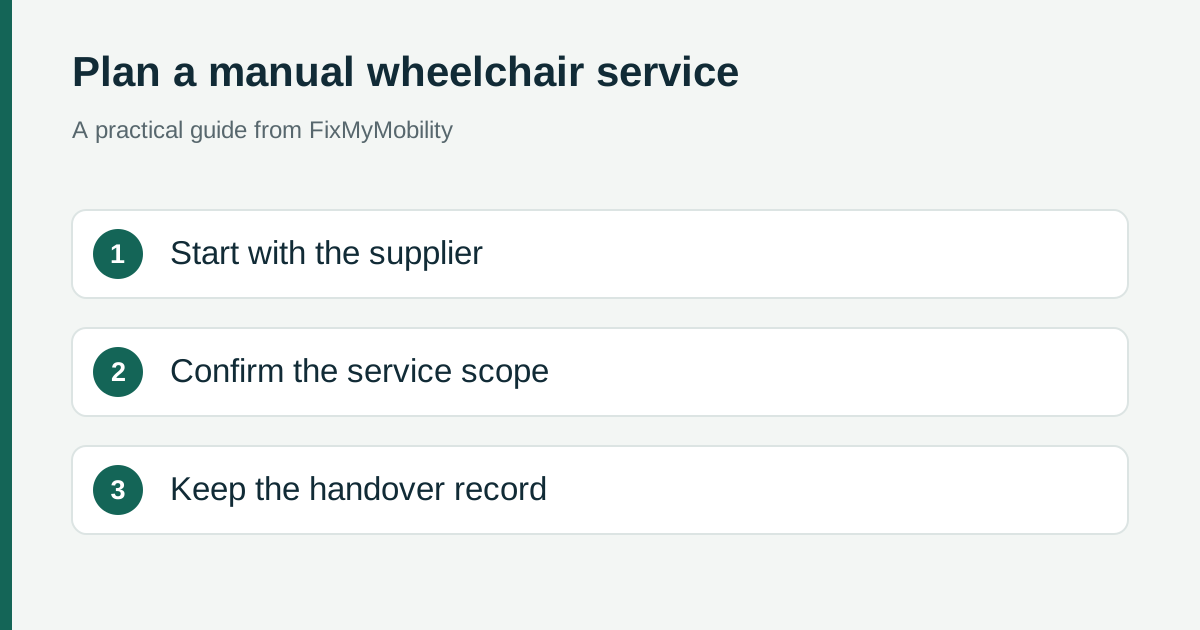
Manual wheelchair servicing is an equipment-specific inspection and maintenance appointment. Before booking, establish who supplied the chair, which business supports it and what the service will cover. A transit chair, an active-user rigid chair and a chair with prescribed seating may need different expertise. The phrase “wheelchair servicing near me” is only the start of finding suitable help.
This guide covers manual chairs. Powered wheelchairs, powered add-ons and specialist controls require the appropriate technical support; use the powerchair repair page for that separate enquiry. Do not assume that a business servicing manual wheelchairs can assess electronics or alter a prescribed seating setup.
If the chair is unsafe, do not keep using it simply because a routine appointment is booked for later. Contact the supplying service or appropriate repair business and describe the problem. Ask about an interim plan if you depend on the chair for everyday activities.
First check whether the chair is yours or supplied on loan
Find the handover paperwork, asset label or original supplier details. If an NHS wheelchair service, charity, hire company or another organisation supplied the chair on loan, ask that organisation which repair route you must use before arranging private work. Ownership and maintenance arrangements should not be guessed from how long you have used the chair.
For example, Wirral Community Health and Care NHS Foundation Trust explains that its loan wheelchairs remain the service's property and that it provides their repairs and maintenance. Its instructions are an example of why the supplying service matters, not a national phone number or a promise about every NHS arrangement. Use your own service's current guidance.
With a privately owned chair, check any warranty or maintenance agreement and identify a business that supports the make and model. You can browse wheelchair repair services and ask about exact capabilities, postcode coverage and access. Directory inclusion is not confirmation that a particular chair can be accepted today.
Describe the chair before asking for a price
Give the manufacturer, model and serial number if available. Say whether the chair is folding or rigid, self-propelled or attendant-propelled, and whether it has prescribed seating or unusual accessories. If you do not know the terminology, a clear description is enough to begin the conversation.
Explain what you need: planned maintenance, a puncture, a loose component, a wheel-lock problem or a change in how the chair moves. A routine service and a fault assessment may be booked differently. If you need both, say so rather than assuming one appointment includes every concern.
Tell the business how much you rely on the chair and whether collection would leave you without suitable equipment. Ask what arrangements are possible before choosing an appointment. A loan chair is not automatically available or suitable, and a standard chair may not meet the needs addressed by your current seating.
Ask for a model-specific checklist
Request the service checklist and ask how it relates to the manufacturer's instructions. Topics to discuss include tyres, wheels, castors, wheel locks, frame, folding mechanism where fitted, upholstery, foot supports and fastenings. These are questions for the service provider, not instructions for adjusting safety-critical parts yourself.
Sunrise Medical's maintenance guidance uses the QUICKIE Nitrum as a model-specific example and distinguishes checks on different components. The important lesson is to use the schedule for your chair rather than copying another model's timetable. Ask the supplier to show you which owner checks apply and which tasks belong with a technician.
If you have a service report from a previous appointment, bring it. Ask the new business to distinguish an existing observation from a new fault and to explain any recommended follow-up. A useful report records the findings and work rather than merely saying the chair has been “looked at”.
Tyres, wheels and castors: explain what has changed
Describe whether the chair has become harder to propel, pulls differently, makes a new sound or feels less predictable. Tell the business when this started and whether the chair was involved in an impact. An observation helps the technician investigate; it does not establish that a particular component needs replacing.
For air-filled tyres, follow the correct model's pressure instructions and ask for help if you cannot manage the recommended checks. A tyre specification for a scooter or another wheelchair is not a substitute. If a tyre is flat or damaged, arrange support rather than using the chair to test how far it will travel.
If a wheel, axle or castor appears insecure, explain that when booking so the business can advise about use and transport. Do not attempt a generic adjustment from a video or compensate by changing the chair's setup. A repairer needs to assess the exact assembly and the equipment's instructions.
Wheel locks, transfers and safety concerns
A wheel-lock concern deserves a clear description. Say what you noticed and in which circumstances, particularly if the chair moved when you expected it to remain still. Do not deliberately repeat an unsafe transfer to demonstrate the problem. Ask the supplier or repairer how to proceed safely.
Distinguish maintenance from changing the chair to suit a different posture or transfer method. A change that seems small can affect how the chair is used. If your support needs have changed, ask the original wheelchair service or appropriate professional whether an equipment or seating review is needed alongside repair.
Our directory can help identify a business that advertises relevant work, but it cannot assess your transfer technique or prescribe a seating position. Explain those needs to the appropriate service rather than accepting a general maintenance appointment as a complete assessment of personal suitability.
Seating, cushions and prescribed equipment
Tell the technician about prescribed cushions, back supports, positioning components and any documented setup. Ask whether it is qualified and authorised to work on those items. A mechanical service does not automatically include a clinical seating review, cushion assessment or adjustment of an individual prescription.
If comfort, support or skin concerns have changed, contact the relevant healthcare or wheelchair service for advice. Report any equipment fault too, but keep the two issues clear: repairing a worn part and reviewing whether the seating still meets your needs may require different people.
Before leaving the chair for work, agree which supplied items should go with it. List removable cushions, foot supports and accessories so they can be accounted for on return. Do not remove or alter a prescribed component unless the responsible service has explained the appropriate process.
What affects a wheelchair service price?
The model, complexity, appointment location, transport and parts can affect the total. Ask what the standard service includes, whether diagnosis is separate and how additional labour is authorised. A quote for a simple transit chair may describe different work from one for an active-user chair with specialist components.
Ask about collection and return if you cannot bring the chair to a workshop. Tell the business about your access arrangements and whether you need the chair returned by a particular date. Find out which dates are confirmed and which depend on inspection or parts availability.
Do not approve replacement parts solely from a general price list. Request the recommended part, why it is needed, compatibility, the complete fitted price and any warranty terms. Our repair quote guide was written around scooters, but its questions about diagnosis, approval and transport can help structure a wheelchair enquiry too.
A service handover checklist
Before the appointment, prepare:
- Manufacturer, model, serial number and supplier or loan-service details.
- The reason for booking and the symptoms you have noticed.
- Previous service or repair reports that relate to the concern.
- Any prescribed components or recorded setup the business needs to know about.
- Collection, access and return arrangements.
- The agreed service scope, quoted charges and approval limit.
- A list of the chair's removable items travelling with it.
At handover, confirm who will contact you if more work is needed. Ask for a description you can understand and time to decide about additional work. If the chair is loaned, ensure the responsible service's authorisation requirements have been followed before anything is changed.
When the chair comes back
Request the report or invoice showing the work done, any outstanding concerns and recommended follow-up. Ask the business to explain the owner checks for the actual chair and demonstrate anything you need to understand. Keep the information with the original handbook and service history.
Check that the items handed over have been returned and that any agreed configuration has been respected. If something feels different or a concern remains, tell the provider promptly and ask for advice before relying on the chair. Do not try to correct an unexplained change yourself.
Common wheelchair servicing questions
Can a bicycle shop service my wheelchair?
Experience with bicycle wheels does not establish support for the complete wheelchair. Confirm make-and-model knowledge, the work being offered and any loan-service restrictions. Prescribed seating and specialist components may need a different provider.
Does every manual chair need the same service interval?
No. Use the manufacturer's instructions, supplying service's arrangements and advice for the way the chair is used. Do not apply another chair's timetable without checking.
Can I find wheelchair servicing through this directory?
You can find businesses advertising wheelchair repairs, then confirm servicing capability, equipment support and current coverage directly. For loan equipment, contact the supplying service first. For a powered chair, start with the separate powerchair enquiry route.
Businesses to ask about a private manual chair service
Martlet Mobility Services in Eastbourne advertises wheelchair servicing on its own website. Wheelfreedom in Chessington publishes manual wheelchair service options in its service information, with support limited to partnered manufacturers. Ask whether the business supports your particular chair and seating arrangement before booking.
These are public listings, not confirmed servicing coverage for every wheelchair. Check your postcode, the proposed scope and any transport arrangements directly. If the chair belongs to an NHS service or another loan provider, use that provider's repair and authorisation route first. Private servicing is not automatically authorised for loan equipment.
Sources and further information
- Sunrise Medical: model-specific manual wheelchair maintenance example
- Wirral Community Health and Care NHS: repairs and ownership of its loan wheelchairs
Sources checked 19 October 2026. Prices and service terms can change. Follow the instructions for your exact equipment.